

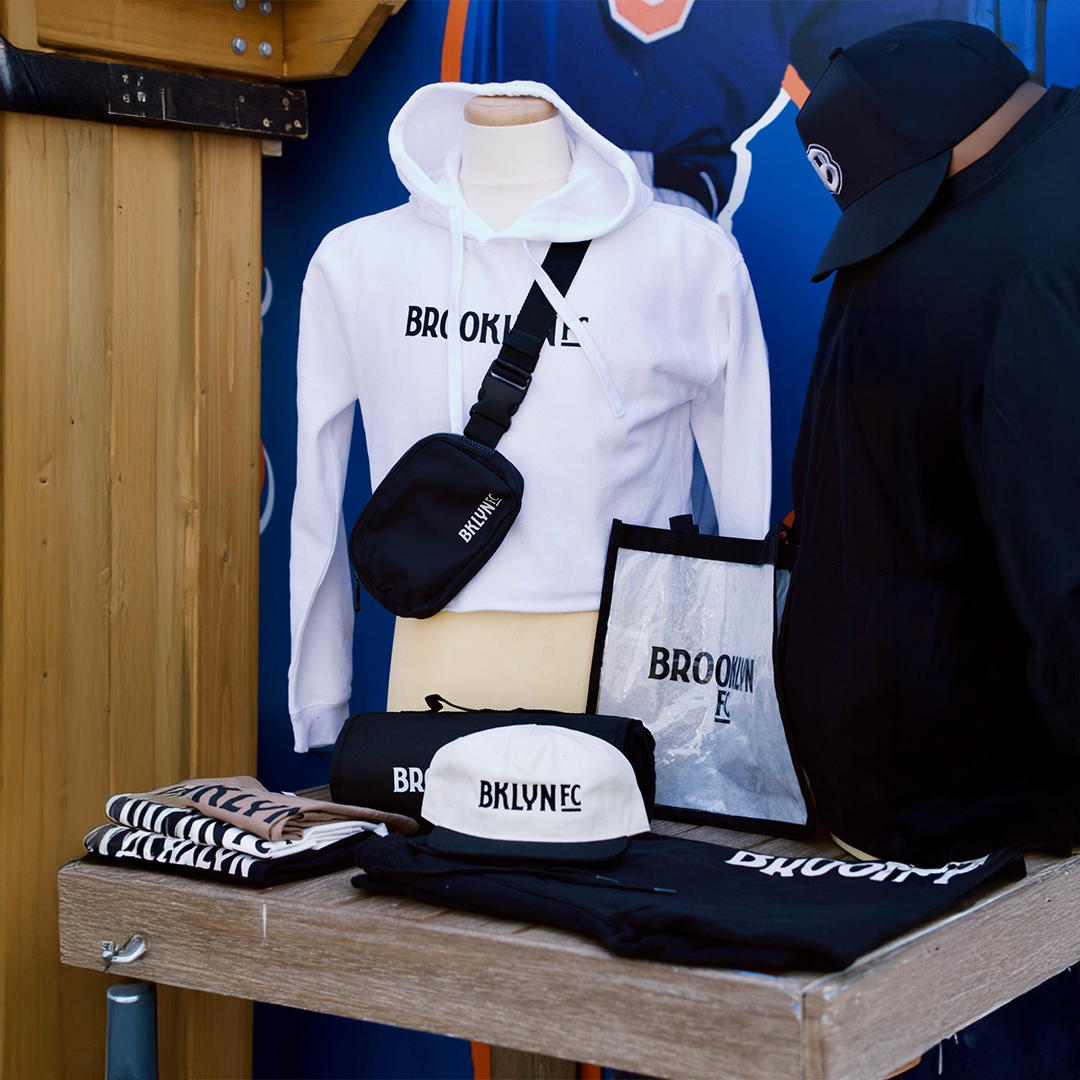
"Merchandise is no longer a passive revenue stream. For modern sports organizations, it is one of the most valuable channels for fan engagement, first-party data, and long-term commercial growth"
For most small to mid-tier sports organizations, the commercial playbook hasn’t meaningfully evolved in decades: Sell licensing rights and distribute through third-party retailers. Merchandise is treated as a nice-to-have that ticks over in the background.
This approach offers predictability and low operational overhead. But it also imposes a ceiling on growth. While audience behavior has evolved; becoming more digital, more engaged, and more direct, the underlying commerce model has not kept pace.
Merchandise is no longer a peripheral category. It is one of the most direct and controllable ways to engage a fanbase. Yet for many teams, it remains underutilized and structurally constrained.
The result is simple: teams are undervaluing the very fanbases they’ve worked so hard to build.
Merchandise Revenue Without Fan Ownership Is a Dead End
Every merchandise transaction is an opportunity to build a direct relationship with a fan. In a wholesale-led model, that opportunity is lost.
A shirt isn’t just a product. It’s a way to signal to the outside world: “this is my team.” But in a wholesale-led model, that interaction is cheapened.
Fans browse generic retail environments. Products are designed for mass appeal, not specific communities. There’s no sense of timing, narrative, or exclusivity. No reason to come back regularly and no mechanism for ongoing engagement.
Wholesale models prioritise distribution over engagement
When teams outsource merchandise operations entirely, they are not just giving up margin. They are giving up one of their most valuable fan touchpoints.
They lose the ability to:
- Create moments around product launches and drops
- Build anticipation and scarcity
- Respond to culture, player narratives, or key sporting moments in real time
- Segment fans through targeted collections and experiences
- Build emotional connection around products
Merchandise becomes static. Predictable. Easy to ignore.
Meanwhile, fans are spending time and money with brands that understand how to turn products into experiences.
Every third-party transaction is lost customer intelligence
Every purchase that happens outside a team’s ecosystem is a missed opportunity to understand the audience behind it.
There is no meaningful customer data.
No insight into buying behavior.
No understanding of repeat engagement.
No visibility into lifetime value.
Without ownership of the relationship, merchandise becomes passive revenue. It exists, but it doesn’t evolve.
At the same time, leading organizations have moved in the opposite direction. They treat commerce not as a byproduct of fandom, but as a core driver of engagement and long-term growth.
Direct-to-Fan Commerce Gives Teams Control Again
Direct-to-consumer is often misunderstood as a channel. It isn’t.
It’s a control layer that sits between your audience and your revenue. When executed properly, it changes the economics of your business. The teams that are pulling ahead don’t treat merch as inventory.
They treat it as interaction design.
Modern merchandise strategies are built around interaction
Products become part of a broader conversation with fans:
- Limited drops tied to moments on and off the pitch
- Player-led capsules that tap into specific sub-communities
- Story-driven collections that give context and meaning to what’s being sold
- Personalization that makes the fan feel seen, not just sold to
This changes the dynamic completely.
Instead of asking:
“How do we sell more stock?”
The question becomes:
“How do we create more reasons for fans to engage?”
Product drops create momentum, urgency, and repeat engagement
It isn’t just about selling more products. It’s about building a system that turns your fans' support into predictable, scalable revenue.
Things like limited drops create urgency and demand spikes. Player-led capsules tap into micro-communities within your audience. Membership models introduce avenues of engagement and foster deeper loyalty.
None of this is possible in a wholesale-led model.
Direct-to-fan commerce isn’t a replacement for existing revenue streams, it’s a multiplier. But only if it’s treated as a strategic capability, not a bolt-on store.
Why Smaller Sports Teams Are Better Positioned Than They Think
There is a common assumption that sophisticated direct-to-fan merch strategies are only viable at the top end of the market.
In reality, smaller teams are often better positioned.

Smaller teams often have more concentrated and engaged fanbases.
Smaller organizations tend to have:
- Tighter-knit communities
- Stronger emotional loyalty
- Less fragmented audiences
- More direct communication with supporters
That creates ideal conditions for targeted merchandise strategies that feel personal, relevant, and culturally connected.
Agility matters more than scale in modern commerce
Smaller teams can move faster.
They can react to moments more quickly.
They can experiment without layers of bureaucracy.
They can build niche product runs that feel authentic rather than mass-produced.
That flexibility is increasingly valuable in modern commerce.
Most Teams Fail Because the Underlying System Is Fragmented
Many organizations recognize the opportunity but approach it in ways that limit impact.
They try to replicate top-tier clubs without the infrastructure required to support the model. They launch storefronts that look modern but lack the operational systems needed to convert and retain customers.
The result is predictable:
- Disconnected tech stacks
- Poor customer experience
- Weak retention
- Operational inefficiency
- Underwhelming revenue performance
This often reinforces the false assumption that:
“our fans just don’t buy merchandise.”
But fans do buy when:
- The product feels relevant
- The experience feels intentional
- The infrastructure supports consistency and engagement over time
A Different Approach to Commerce with TVP NYC
Building a high-performing direct-to-fan business requires more than an online storefront.
It requires alignment between product strategy, data infrastructure, customer experience, and commercial execution. It means thinking in terms of systems, not campaigns.
- How do you capture and utilize customer data from day one?
- How do you structure product drops to drive demand, not just supply inventory?
- How do you create repeat purchase behavior, not one-off transactions?
- How do you ensure the technology stack enables speed, flexibility, and insight instead of friction?
Most teams don’t need more ideas. They need an operating model.
Why Most Teams Need an Operational Commerce Partner
The gap for most teams is capability, rather than awareness.
Merchandise is often approached as a static catalog rather than a dynamic engagement channel. Products are listed, but not positioned. Stores are launched, but not actively managed.
Commerce Growth Depends on Execution, Not Just Design
Building and scaling a direct-to-fan engine requires expertise across:
- Strategy
- Technology
- Operations
- Fulfillment
- Customer experience
- Retention
- Growth
The difference between building something that looks good and building something that performs comes down to how these systems are integrated and managed over time.
The strongest commerce partners do not simply deploy storefronts.
They operate alongside organizations with a focus on:
- Iteration
- Operational scalability
- Long-term engagement
- Measurable revenue outcomes
The Opportunity Ahead
For smaller sports organizations, the opportunity is not simply to increase merchandise revenue. It is to establish a direct relationship with their fanbases.
In an environment where third-party platforms dominate distribution and attention is fragmented, owned channels are increasingly valuable.
Merch is one of the few places where:
- The fan chooses to engage
- The brand sets the terms
- The experience can be fully controlled
That’s not just commerce. That’s connection.
The teams that win in this next phase won’t be the ones with the biggest product ranges.
They’ll be the ones who understand that merch is media, that every drop is a moment, that every product is a touchpoint, and that every purchase is part of a relationship.
The question isn’t whether your fans will buy. It’s whether you’re giving them something worth showing up for.