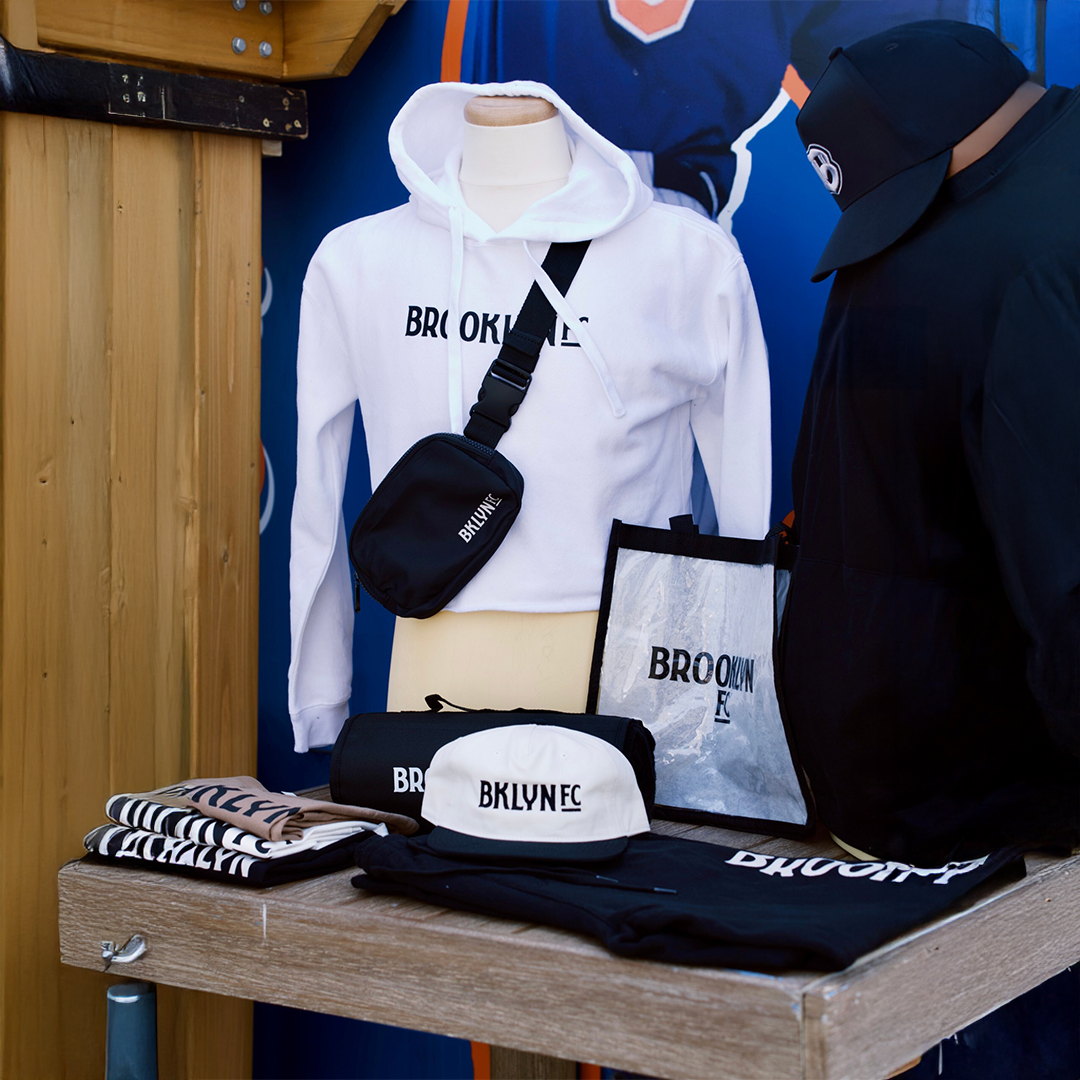


Most sports teams are not struggling with merchandise demand. They are struggling with fragmented commerce systems that prevent them from turning fan engagement into predictable, scalable revenue.
A Shopify store. An Instagram shop. A few merchandise drops around key fixtures. Activity, rather than infrastructure.
The problem isn’t a lack of effort. It’s a lack of cohesion. Teams are executing fragments of a team merch program, but very few are operating it as a system designed to generate predictable, high-margin revenue. That distinction matters. Because direct-to-fan isn’t about selling online. It’s about owning demand. And if you don’t own the fanbase, you don’t own the revenue.
The Real Shift: From Merchandise to Commerce Infrastructure
“Swag” is passive. A branded team merchandise strategy is not. At its core, direct-to-fan is about control. Control over how demand is created, over how it converts, and how it compounds over time.
It means owning the entire customer lifecycle end-to-end:
- How fans discover product
- What motivates them to buy
- How often they return
- What they spend over time
It also means owning the underlying data that powers those decisions. Most teams today are still operating on rented infrastructure:
- Social platforms dictate reach
- Marketplaces control the transaction
- Retail partners own the customer relationship
That model caps upside. It limits visibility. And it makes revenue unpredictable. Direct-to-fan merchandise flips that dynamic. It turns commerce into a controlled system rather than a collection of external dependencies.
The Three Pillars of a High-Performing Direct-to-Fan System
When sports merchandise programs actually work, it’s because three components are operating in sync, not in isolation.
1. Demand Creation: Merchandise demand is created through moments, not product listings
Demand comes from context not from product listings. The teams driving independent merchandise sales behave less like retailers and more like media operators. They’re building narratives around:
- Players
- Culture
- Community moments
Content drives commerce, rather than just supplementing it.
This is where merchandise drop culture becomes powerful. Not as a gimmick, but as a structured way to concentrate attention:
- Limited releases create urgency
- Story-led launches create meaning
- Community involvement creates relevance
Static catalogs don’t create demand. Moments do.
2. Conversion Infrastructure
Once demand exists, most teams lose it at the point of conversion. The issue is rarely traffic.
High-performing DTC setups treat e-Commerce as performance infrastructure:
- Mobile-first UX that removes unnecessary steps
- Fast, stable storefronts that don’t leak intent
- Localized checkout experiences (currency, payment methods, shipping clarity)
Small improvements here compound quickly. A marginal lift in conversion rate across high-intent traffic is often more valuable than any acquisition spend. If you’re serious about how to sell merchandise as a sports team, you need to understand that conversion is not a design exercise. It’s a revenue function.
3. Retention & Monetization: Retention systems turn one-time buyers into predictable revenue
This is where most of the value sits, and where most teams underinvest.
Email and SMS are still the highest-leverage revenue channels in direct-to-consumer merchandise. Not because they’re novel, but because they’re owned. The difference between basic and advanced execution is segmentation.
Not:
- One list
- One message
- One campaign
But:
- Behavior-based segments
- Lifecycle-triggered communication
- Clear repeat purchase strategies
Retention turns one-off transactions into predictable revenue. Without it, every sale starts from zero.

From Static Catalogs to Calendar-Driven Commerce
Most sports organizations still operate team merchandise like a traditional retailer:
- A fixed catalog
- Occasional updates
- Passive availability
The highest-performing teams operate on a calendar.
They plan product around:
- Fixtures
- Player moments
- Cultural relevance
- Seasonal narratives
This shift changes everything.
Instead of asking:
“What products do we sell?”
The question becomes:
“What moments are we monetizing?”
A calendar-driven approach enables:
- Structured drops instead of static inventory
- Campaign-led merchandising instead of passive browsing
- Alignment between content, product, and timing
It also creates rhythm, something fans can anticipate and engage with repeatedly.
Where Most Teams Break Down
The gap between intent and execution is usually operational, not strategic.
Common failure points are predictable:
e-Commerce as a side project
Often under-resourced and disconnected from commercial strategy.
Outsourced control
Over-reliance on marketplaces and retail partners that dilute margin and limit data access.
Fragmented systems
Multiple tools that don’t communicate, resulting in no single source of truth.
Operational inconsistency
Inventory issues, slow fulfilment, and poor customer experience eroding trust.
None of these are abstract problems. They directly impact revenue, margin, and repeat purchase behavior.
What Owning a Modern Merchandising System Actually Looks Like
A modern team merch program operation is not complex for the sake of it, but it is structured. At a minimum, it includes:
- An owned storefront (typically Shopify or equivalent) as the central transaction layer
- Integrated analytics and CRM, allowing for real segmentation and lifecycle tracking
- Global fulfilment capability, enabling consistent experience across markets
- A defined merchandising roadmap tied to a campaign calendar
- A continuous optimization loop across UX, product, and marketing
The key is not the individual components, but rather, how tightly they’re connected.
When this system is working, teams gain:
- Visibility into demand
- Control over margin
- Predictability in revenue
That’s the difference between selling products and operating commerce.
Why Direct-to-Fan Commerce Requires Operational Partnership; The TVP NYC Fit
Most partners in this space focus on pieces: Platform builds, campaigns, creative, and paid media. The issue is that direct-to-fan doesn’t break down cleanly into those silos.
It requires coordination across:
- Strategy
- UX
- Data
- Operations
TVP NYC operates inside that intersection. Not as a vendor delivering isolated outputs, but as a commerce operator focused on outcomes, specifically, revenue performance and system integrity.
That means:
- Connecting demand creation to conversion, not treating them separately
- Building infrastructure that teams can actually run, not just launch
- Embedding data into decision-making, not just reporting
The positioning isn’t about tools or tactics. It’s about operating a system end-to-end.
The Teams That Win Will Control Demand
Direct-to-fan is not simply a channel shift. It is a structural shift toward ownership, control, and long-term commercial resilience.
The teams that succeed will not be the ones with the largest catalogs or the biggest audiences. They will be the ones that build systems capable of turning fan engagement into compounding revenue over time.
Better data leads to better decisions.
Better decisions lead to stronger performance.
Stronger performance creates the foundation for long-term growth.
That is what owning demand actually means.