Corporate merchandise has evolved far beyond ordering a few branded T-shirts for trade shows.
Today's businesses need employee welcome kits, customer gifts, event merchandise, influencer campaigns, sales enablement materials, and company stores that employees can access year-round.
The challenge? Most organizations still manage branded merchandise through a patchwork of vendors, spreadsheets, agencies, and fulfillment providers. One supplier produces apparel, another handles promotional products, another stores inventory, while someone internally coordinates shipping and replenishment. The result is inconsistent branding, slow turnaround times, unnecessary costs, and an overwhelming amount of manual work.
A growing number of companies are replacing this fragmented approach with a unified commerce model for branded merchandise; one storefront, one partner, and one fulfillment ecosystem.
What Is a Unified Swag Store?
A unified swag store is a branded online storefront where employees, customers, partners, and internal teams can order approved merchandise through a single platform.
Rather than sourcing products from multiple vendors every time an event or campaign comes around, organizations maintain a centralized catalog of approved merchandise that can be ordered whenever it's needed.
This approach creates consistency across every touchpoint while dramatically reducing operational complexity.
Instead of managing:
- Multiple merchandise vendors
- Separate fulfillment providers
- Independent warehousing
- Individual print shops
- Manual inventory tracking
Businesses work with a single branded merchandise partner that manages the entire lifecycle. Read more about Hybrid Stores + Portals here
The Hidden Cost of Multiple Merchandise Vendors
Many organizations don't realize how much time is spent managing branded merchandise until they attempt to consolidate it.
Common challenges include:
- Different product quality between suppliers
- Inconsistent logo placement and branding
- Inventory spread across multiple warehouses
- Manual ordering processes
- Limited visibility into stock levels
- Long lead times for replenishment
- Duplicate products purchased by different departments
- Employees unsure where to order approved merchandise
These inefficiencies often consume significant internal resources that could be focused on higher-value initiatives.
Why a Single Vertical 3PL Changes Everything
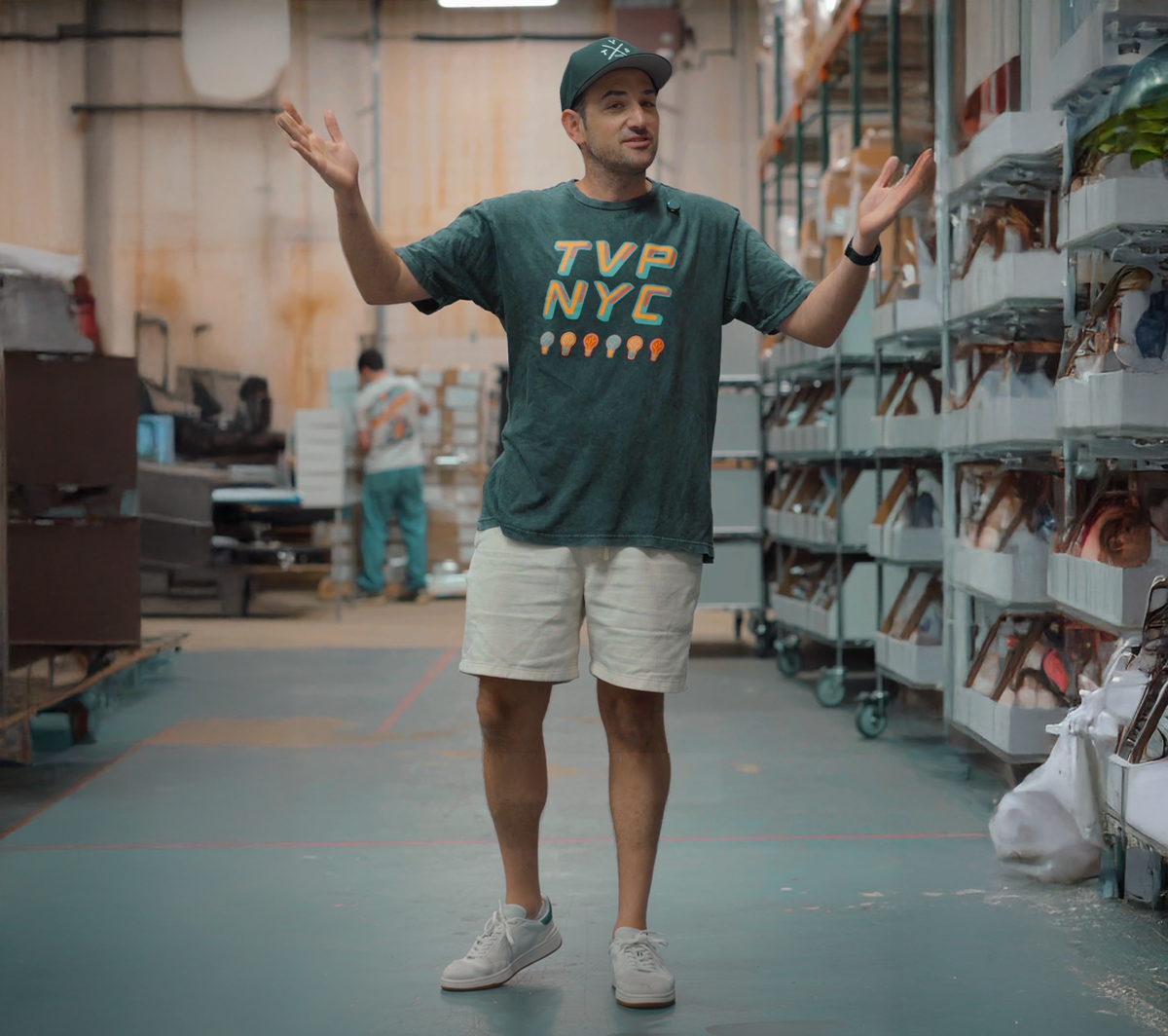
A vertical 3PL (Third-Party Logistics) partner brings production, warehousing, inventory management, and fulfillment together under one roof.
Rather than coordinating several suppliers, companies gain a single operational partner responsible for the complete merchandise ecosystem.
A modern branded merchandise partner can manage:
- Product sourcing
- Design production
- Quality control
- Inventory management
- Warehousing
- Pick and pack fulfillment
- Print-on-demand production
- Returns and inventory refresh
This creates a much smoother experience for both internal teams and end recipients.
Supporting Every Merchandise Use Case
A modern swag program needs to support much more than conference giveaways.
Standardized Company Swag
Every organization benefits from a core collection of high-quality branded merchandise that's consistently available throughout the year.
This might include apparel, drinkware, notebooks, backpacks, technology accessories, and welcome kits.
Rather than allowing inventory to become outdated, many organizations adopt quarterly merchandise drops that introduce seasonal products while retiring slower-moving inventory.
This keeps the collection fresh without creating unnecessary waste.
Event-Specific Merchandise
Sales kickoffs, customer conferences, recruiting events, product launches, and internal meetings all require unique merchandise.
Instead of asking marketing teams to coordinate every request, a self-serve storefront allows departments to select approved products, upload event artwork where appropriate, and place orders quickly.
A dedicated account representative can assist with larger or more customized projects while keeping routine orders simple and efficient.
Customer & Partner Gifting
Corporate gifting has become an important part of relationship building.
Whether sending onboarding packages, holiday gifts, executive gifts, or influencer kits, organizations increasingly expect personalized experiences with custom packaging, handwritten notes, and flexible shipping options.
A centralized fulfillment partner makes these programs far easier to scale.
Balancing Held Inventory with Print-on-Demand
Not every product belongs in a warehouse.
The most effective merchandise programs combine:
Held Inventory
Ideal for:
- Best-selling apparel
- Employee onboarding kits
- Frequently ordered products
- Event essentials
- Popular branded merchandise
Print-on-Demand
Perfect for:
- Limited-edition campaigns
- Team-specific apparel
- Small quantity orders
- Regional variations
- Experimental product launches
Combining both models can minimize cost while ensuring popular products remain readily available. Note on POD - it's not a solution for everyone - especially where quality and consistency are priorities for your customers.
Inventory Management Shouldn't Become Someone's Full-Time Job
One of the biggest frustrations companies experience is ongoing inventory maintenance.
Products eventually sell out.
Sizes become unavailable.
Brand guidelines change.
Packaging evolves.
Seasonal products become outdated.
Without proactive management, company stores quickly become cluttered with discontinued or obsolete merchandise.
An experienced branded merchandise partner takes ownership of inventory lifecycle management by monitoring stock levels, planning replenishment, recommending new products, retiring underperforming items, and maintaining a catalog that reflects current brand standards.
This allows internal marketing and operations teams to focus on strategic initiatives rather than warehouse logistics.
AI Is Becoming the Next Evolution of Merchandise Management
As commerce platforms become more intelligent, AI is beginning to improve how branded merchandise programs operate.
Emerging capabilities include:
- Demand forecasting
- Automated inventory planning
- Product recommendations
- Smart reorder alerts
- Personalized merchandise suggestions
- Purchasing trend analysis
- Catalog optimization
- Reporting and performance insights
These tools help organizations make better purchasing decisions while reducing excess inventory and improving fulfillment efficiency.
As AI capabilities continue to mature, businesses should look for partners investing in intelligent commerce platforms that can support long-term growth. TVP NYC uses AI tools and our proprietary management tech platform called Phantom Commerce.
Choosing the Right Branded Merchandise Partner
The best merchandise partners do far more than print logos on products.
They become an extension of your operations by combining creative services, production, warehousing, fulfillment, technology, and inventory management into a single, scalable solution.
When evaluating potential partners, look for:
- A unified branded storefront
- Production and fulfillment under one provider
- Warehousing and inventory management
- Print-on-demand capabilities
- Held inventory support
- Quarterly product refreshes
- Dedicated account management
- Self-service ordering
- Corporate gifting expertise
- AI-powered platform capabilities
- Reliable reporting and analytics
A Better Way to Scale Branded Merchandise
As organizations grow, the traditional multi-vendor approach becomes increasingly difficult to manage.
A unified commerce strategy replaces disconnected processes with a single branded storefront backed by one experienced partner responsible for production, fulfillment, inventory, and ongoing optimization.
The result is a more consistent brand experience, faster ordering, simplified operations, better inventory control, and a merchandise program that scales alongside the business.
For companies looking to modernize their branded merchandise strategy, partnering with a single vertical 3PL isn't simply a logistics decision, it's an investment in a more efficient, more cohesive brand experience.